What Happens After You Hire a Criminal Defense Lawyer in Lafayette LA

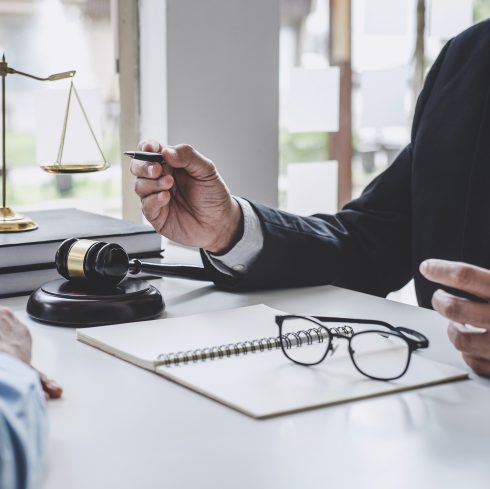
The moment after you hire a criminal defense lawyer is rarely dramatic. There is no instant courtroom speech, no immediate dismissal, no clean feeling that the problem has been solved. What usually happens instead is quieter and more important. The case starts to come under control.
That shift matters. When someone is arrested or learns that charges may be coming, the first few days often feel chaotic. Family members want answers. Employers may be asking questions. A bond hearing may be pending. The police report, if you have seen it at all, probably tells only part of the story. At that stage, people often assume the lawyer’s job begins in court. In reality, some of the most valuable work happens long before a judge hears argument.
If you have retained a criminal defense lawyer Lafayette LA residents trust with serious charges, you should expect a process, not a miracle. A strong defense is built piece by piece. It starts with damage control, moves into investigation and strategy, and then develops through negotiation, motion practice, or trial preparation depending on what the evidence actually shows.
The first change is that communication should go through your lawyer
One of the earliest and most practical benefits of hiring counsel is that you stop navigating the system alone. If law enforcement contacts you again, your lawyer becomes the point of contact. If a detective wants an interview, your attorney can say no, ask why, or control the conditions under which any communication happens. If a prosecutor’s office has questions, those questions should not be coming directly to you.
That is not a technicality. It is protection.
Many criminal cases get harder because the accused person keeps talking after the arrest. People explain, deny, minimize, or try to sound cooperative. In doing so, they often lock themselves into details that later turn out to be incomplete or inaccurate. Even truthful people make mistakes when they are stressed, sleep deprived, or frightened. A good lawyer understands that the state will treat every statement as evidence if it helps the prosecution and as a contradiction if it helps the defense.
This is one reason the period right after hiring counsel can feel strangely uneventful. Your lawyer may tell you not to contact certain people, not to post online, and not to answer questions from anyone but the defense team. That advice can feel restrictive, but it usually prevents avoidable damage.
Your lawyer begins by stabilizing the case
Before anyone can make smart strategic decisions, the case has to be stabilized. That usually means identifying the exact charges, the current court date, any bond conditions, and any immediate risks such as warrants, protective orders, license consequences, or immigration exposure.
In Lafayette, as in other jurisdictions, the practical details can shape the defense as much as the legal theory. Missing a court appearance can create a new problem overnight. Violating a no-contact order, even casually, can hurt bond status and credibility. Failing a drug test while on pretrial release can turn a manageable case into a custody fight.
A criminal defense lawyer will usually sort through a short list of urgent questions very quickly:
- What exactly has the client been charged with, and in which court?
- Is the client in custody, out on bond, or at risk of being picked up?
- Are there deadlines for appearance, motions, or surrender?
- Is there evidence that needs to be preserved immediately?
- Are there collateral consequences at work, school, or home that need attention now?
Sometimes this phase is straightforward. Other times it is not. I have Criminal defense lawyer Lafayette LA seen cases where a client believed he was charged with a misdemeanor, only to learn there was a felony hold attached. I have seen family members assume bond conditions allowed normal communication, only to find a no-contact provision buried in the paperwork. Those details are not glamorous, but they are where experienced defense work starts.
Expect a long, detailed intake, not just a quick recap
Clients are often surprised by how much their lawyer asks in the beginning. The attorney is not looking only for a version of events. The lawyer is listening for timeline problems, witness issues, police procedure concerns, digital evidence, prior disputes, medical history, and facts that may matter later even if they seem minor today.
A useful intake is rarely neat. People remember things out of order. They leave out embarrassing details. They focus on what feels unfair rather than what is legally significant. A seasoned lawyer knows how to separate emotional truth from evidentiary value.
For example, in a battery case, a client may spend ten minutes explaining that the other person is manipulative, dishonest, and has caused problems for years. That may all be true. But the defense may turn instead on a narrower set of facts: who made physical contact first, whether there was visible injury, whether there are independent witnesses, whether self-defense is plausible, and whether the client made damaging admissions afterward. Good counsel will hear the larger story but then drill into the details that move cases.
This is also when your lawyer starts testing your reliability. That may sound blunt, but it matters. If key facts keep changing in the first meeting, the attorney needs to know that early. Credibility problems are manageable when recognized at the start. They are dangerous when discovered on the eve of trial.
The defense investigation begins, and it is often broader than clients expect
Once retained, a lawyer does not simply wait for the prosecution’s file. At least, not if the lawyer is doing the job well. The defense should begin its own investigation.
That can include requesting body camera footage, dash camera video, dispatch logs, 911 audio, forensic reports, photographs, jail calls, social media records, and phone data. In some cases, it means locating witnesses before memories fade. In others, it means visiting the scene to understand lighting, sight lines, distances, traffic flow, or access points. In a DWI matter, it may mean reviewing maintenance records for the breath instrument and the timing of observation periods. In a narcotics case, it may mean examining the legality of the stop, search, or seizure before even reaching the lab results.
Clients sometimes assume there is one decisive piece of evidence that will determine everything. That happens occasionally, but most cases turn on a combination of facts. A shaky witness becomes shakier if the video does not match. A lawful stop becomes questionable if dispatch timestamps do not line up. A confession may lose force if it followed a rights violation, fatigue, intoxication, or coercive questioning.
The earlier this work starts, the better. Surveillance footage disappears. Phones are replaced. Text threads get deleted. People move. A person hiring a criminal defense lawyer Lafayette LA after an arrest should understand that one of the first advantages of retaining counsel is speed. Delay rarely helps the defense preserve evidence.
You may be told to do less, not more
Clients often want action. They want to call the accuser, explain themselves to police, gather character letters, post their side online, or have relatives intervene. Most of the time, those impulses need to be restrained.
There are exceptions. Sometimes a lawyer will want school records, employment documents, treatment records, counseling enrollment, military records, or proof of family responsibilities. Sometimes early voluntary steps, such as substance abuse treatment or anger management, can help at bond review, in plea discussions, or at sentencing. But those decisions should be strategic, not reactive.
Here is where experience matters. The same act can help one client and hurt another. Entering treatment early may show accountability in one case. In another, it may be framed as an implicit admission. Writing an apology letter might humanize one defendant and become devastating evidence against another. There is no universal script.
A reliable lawyer gives clients concrete rules for the weeks ahead:
- Do not discuss the facts of the case with anyone except your lawyer and the defense team.
- Do not contact an alleged victim or key witness unless your lawyer clearly authorizes it.
- Do not post about the arrest, the police, the court, or the other people involved.
- Follow every bond condition exactly, even if it feels burdensome or unfair.
- Keep records of anything your lawyer asks you to preserve or collect.
Those instructions can make clients feel passive. They are not passive. They are disciplined. In criminal defense, discipline prevents self-inflicted setbacks.
The prosecutor’s file will matter, but it is not the whole story
Sooner or later, your attorney will obtain discovery or otherwise review the prosecution’s evidence. Clients tend to imagine this as a dramatic reveal. Often it is more mundane, a stack of reports, videos, lab sheets, affidavits, and records that require careful comparison.
What matters is not just what is in the file, but what is missing, inconsistent, or overstated.
Police reports are useful, but they are not neutral documents. They are written from the state’s point of view and often in a way that supports probable cause and charging decisions. Officers may omit details they considered irrelevant. Witnesses may be summarized rather than quoted. Timelines may be compressed. Descriptions such as “aggressive,” “nervous,” or “combative” can hide a lot of ambiguity. A lawyer reading a report is not merely absorbing information. The lawyer is testing it against recordings, physical evidence, common procedure, and human behavior.
This is often the stage when clients hear difficult truths. Some cases are stronger for the defense than the client expected. Others are weaker. A good lawyer does not inflate hope to keep a client calm. The lawyer explains where the pressure points really are. Maybe the search issue is better than the client realized. Maybe the text messages are worse than anyone thought. Maybe a witness the client dismissed turns out to be independent and credible. Honest evaluation is part of competent representation.
Court appearances usually look less dramatic than television
After hiring counsel, many people expect immediate courtroom battles. Most appearances are procedural. Arraignments, status conferences, and scheduling hearings may take only a few minutes. The important work often happens outside the courtroom, through file review, negotiation, motions, and client preparation.
That does not mean the appearances do not matter. They create the official rhythm of the case. Dates get set. Conditions may be modified. The judge gets an early sense of how the case is being handled. In some situations, your lawyer may waive your appearance if the rules allow and the court approves. In others, you must be present and properly dressed, on time, and composed.
A smart attorney also uses the Criminal defense lawyer Lafayette LA slow parts of the court process productively. If the state has not produced critical evidence, the defense can press for it. If a witness problem is developing, the defense can investigate it. If a favorable resolution is possible, the groundwork can be laid before the next setting rather than waiting until the last minute.
Motions can change the entire case, but only when the facts support them
Clients often ask whether their lawyer will “file a motion to dismiss.” Sometimes that is possible. More often, the meaningful pretrial motions involve suppression of evidence, challenges to identification procedures, statements, searches, seizures, forensic testing, or expert methodology.
These motions are not magic words. They succeed when the facts and law justify them. If police lacked legal grounds to stop a vehicle, evidence found afterward may be vulnerable. If a statement was obtained without proper safeguards, it may be challenged. If the chain of custody on narcotics or a blood sample is weak, that may affect admissibility or weight.
Filing every imaginable motion can feel aggressive, but volume is not skill. Judges notice when defense filings are generic or unsupported. Prosecutors do too. Strong defense lawyers choose motions that fit the case and then build them carefully. That may mean attaching exhibits, requesting hearings, and cross-examining officers with precision. One focused motion can do more than ten boilerplate ones.
Negotiation begins earlier than most clients realize
Many criminal cases resolve without trial, but that does not mean they resolve cheaply or casually. Effective negotiation starts long before a plea offer is formally accepted or rejected. It begins with leverage.
Leverage can come from legal weaknesses in the state’s case. It can come from mitigation, no prior record, treatment progress, restitution, military service, employment history, witness issues, evidentiary problems, or practical constraints in the prosecution’s proof. Sometimes it comes from the defense being clearly ready for trial when the state is not.
Clients sometimes misunderstand plea negotiations as a sign the lawyer is giving up. Usually, it means the lawyer is doing the full job. A defense attorney should be able to pursue dismissal where justified, prepare for trial where necessary, and still negotiate intelligently when a controlled resolution is in the client’s best interest.
That last phrase matters: in the client’s best interest. The “best” outcome is not always the one that sounds best in the abstract. A deferred resolution, amended charge, diversion option, or plea to a lesser offense may preserve employment, licensing, immigration stability, or custody rights in ways a client did not initially appreciate. On the other hand, some offers are unacceptable once you understand the hidden consequences. This is where local judgment matters as much as raw legal knowledge.
Trial preparation starts before anyone knows whether there will be a trial
One of the clearest signs of a serious defense lawyer is this: the attorney prepares as though the case may be tried, even while negotiating. That affects everything.
Witnesses are interviewed with future testimony in mind. Exhibits are organized. Weak points in the client’s story are confronted early. Potential impeachment issues are not ignored just because a plea remains possible. If experts may be needed, that question is addressed with enough time to make real use of them.
This can be uncomfortable for clients. Trial preparation forces candor. The lawyer may ask how a prosecutor will exploit past messages, prior convictions, inconsistent statements, or bad optics. The lawyer may press the client to practice answers, remain silent on certain points, or decide whether testifying is worth the risk. These are not signs of pessimism. They are signs of competent preparation.
Even when a case resolves short of trial, preparation changes outcomes. Prosecutors can tell when the defense understands the file and is ready to litigate. Weak offers become stronger when the state sees that the defense is not bluffing.
Your life outside court becomes part of the case
Criminal charges do not stay neatly inside the courthouse. They spill into work, family, school, licensing, finances, and mental health. A seasoned lawyer keeps an eye on those effects because they influence legal strategy and because they matter to the client’s real life.
Someone accused of domestic violence may be worried about firearm restrictions, child exchanges, and protective order terms. A college student may face school discipline on a faster track than the criminal case. A nurse, teacher, commercial driver, or plant worker may have licensing or reporting obligations. A noncitizen may face immigration issues from a plea that looks minor on paper. A parent in a custody dispute may discover that even an unresolved charge is being used against them.
This is where a local criminal defense lawyer Lafayette LA clients hire for serious representation can be especially useful. Local practice is not just about knowing the statutes. It is about understanding how local courts move, how prosecutors evaluate cases, what judges tend to focus on at bond or sentencing, and how common collateral issues play out in the area. No lawyer controls those factors, but familiarity helps the client make better decisions.
You should expect honesty, not constant reassurance
There is a difference between a lawyer who is calm and a lawyer who is candid. The best defense attorneys are usually both. They do not panic at setbacks, but they also do not promise outcomes they cannot guarantee.
After you hire counsel, there may be stretches where nothing seems to happen. That does not always mean nothing is being done. Evidence may be under review. A prosecutor may be waiting on lab results. A hearing date may be weeks out. Negotiations may require patience. At the same time, you are entitled to understand where the case stands. Good communication does not require daily updates, but it does require clarity about the next significant event, the main risks, and the current strategy.
Clients should also expect hard conversations. If your lawyer tells you a witness will likely be believed, that is useful. If your lawyer says jail is a realistic risk, that is responsible advice. If your lawyer says the best path may involve a negotiated result rather than a fight for complete dismissal, that is not weakness. It may be the judgment that saves a career, a license, or months of unnecessary exposure.
The endgame depends on the evidence, not on the panic of the first week
Looking back, many clients are surprised by how different the case feels sixty or ninety days after hiring counsel. The fear is still there, but it is usually more focused. The facts are clearer. The possible outcomes are narrower and more concrete. The emotional noise of the arrest has been replaced by an actual legal roadmap.
That does not mean the process is easy. Criminal cases can drag. Courts reset dates. Discovery arrives late. Witnesses become problems. Plea discussions stall. Clients get tired. Families get impatient. But those are normal pressures, not proof that the defense is failing.
What should be happening after you hire a criminal defense lawyer is disciplined progress. The case should be investigated. Risks should be explained. Deadlines should be managed. Bond conditions should be protected. Negotiation should be informed by facts, not fear. Trial should be treated as a real possibility, not a slogan.
When that work is being done properly, the immediate crisis begins to give way to something more valuable than reassurance. It gives way to strategy. And in criminal defense, strategy is often what separates damage that can be managed from damage that follows a person for years.
Ikerd Law Firm
600 Jefferson St Ste 903
Lafayette, LA 70501
(337) 366-8994
FAQ About Criminal defense lawyer Lafayette LA
How much does a criminal lawyer cost in Louisiana?
Fees vary with the charges, complexity, expected work, and attorney's experience. Ask for a written fee agreement explaining the services included, payment schedule, and any separate expenses before hiring counsel. An initial consultation can help clarify the likely scope and cost of representation.
Who is the best criminal defense attorney in Lafayette, LA?
There is no single attorney who is the best fit for every case. Look for a Louisiana-licensed lawyer with experience handling similar charges, clear communication, and a fee arrangement you understand. Discuss the lawyer's approach during a consultation, and be cautious of anyone who guarantees a result.
How to afford a criminal defense lawyer?
Ask prospective attorneys about their fees and whether payment arrangements are available. If you cannot afford representation, ask the court or local public defender's office how to apply for appointed counsel. Eligibility depends on your finances, the case, and applicable requirements; appointment is not automatic.